
Air Conditioner Repair or Replacement: What to Consider
Updated 2026-09-08
A central or window air conditioner that stops cooling properly, trips its breaker, or needs a second or third service call in a season raises the same question every time: is this worth repairing, or is it time to replace the unit? Homeowners calling for AC repair in Gatineau often start the conversation assuming a repair is automatically the cheaper path, but that is not always true once age, refrigerant type, and part availability are factored in. This guide sets out the practical considerations a technician weighs when advising on AC repair versus replacement, so you can ask informed questions before committing to either option.
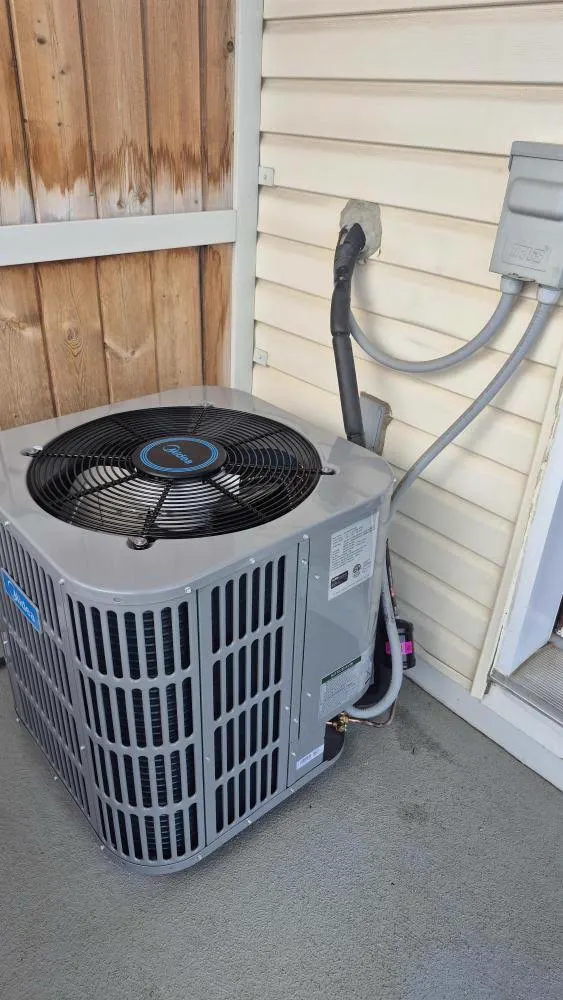
How old is the unit?
Central air conditioners have a typical service life that depends on the brand, how well it has been maintained, and how hard it has run over the years. A unit nearing or past the upper end of its expected lifespan is a riskier candidate for a costly repair, since other components, such as the compressor or coil, may not be far behind in wearing out. When a technician asks for the age and model of your unit before quoting AC repair in Gatineau, this is why: age changes the calculation even before the specific fault is diagnosed.
Refrigerant leaks and their significance
- A refrigerant leak is not a one-time top-up problem; if the system loses charge again, the leak itself has not been fixed.
- Leaks can occur in the coil, line set, or fittings, and locating the exact point sometimes takes more diagnostic time than the repair itself.
- Repeated low-refrigerant symptoms (weak cooling, ice on the coil, longer run times) are a sign to ask specifically about leak detection rather than another recharge.
- The refrigerant type in the system affects both the cost and the practicality of an ongoing leak repair, discussed below.
R-22 and other phased-out refrigerants
Many older air conditioners, particularly units installed before the mid-2010s, use R-22 refrigerant. R-22 production and import has been phased down under Canadian and international agreements, which has made it scarcer and more costly to source when a system needs a recharge. If your unit uses R-22 and has a leak, repeatedly recharging it can become expensive and does not address the underlying problem. Ask your technician directly what refrigerant your system uses; if it is R-22, that fact alone often shifts the conversation toward replacement with a system that uses a currently produced refrigerant.
Comparing repair cost to replacement
- Ask for a written repair estimate and a written replacement estimate so you can compare them directly rather than guessing.
- A repair that represents a large share of what a full replacement would cost is generally a weaker investment, especially on an older unit.
- Factor in whether this is an isolated failure or the latest in a string of repairs over the past few seasons.
- Consider that a failing compressor, in particular, is often a signal that replacement is the more durable path forward.
Parts availability
As manufacturers move away from older refrigerants and compressor designs, replacement parts for discontinued models can become harder to find, sometimes only available as used or refurbished components. If a needed part is backordered or discontinued, a repair may take longer to complete and be less reliable once installed. Ask whether the required part is still in active production before agreeing to a repair on an older unit.
Considering a heat pump instead of a straight AC replacement
When an air conditioner needs replacing, it is worth asking whether a heat pump makes sense in its place. A heat pump provides cooling in summer the same way an air conditioner does, but it can also provide heating during milder and moderately cold weather, which a standard air conditioner cannot do. This does not suit every home or budget, and it depends on your existing heating system, electrical capacity, and how the equipment would be sized for our climate, but it is a reasonable question to raise with your contractor at the point of replacement rather than after a new straight AC unit is already installed.
Signs that point toward repair
- The unit is relatively young and has a documented, regular maintenance history.
- The failure is a discrete, inexpensive component rather than the compressor or coil.
- The refrigerant is still in active production and not subject to phase-down restrictions.
- This is the first service call in several years, not the latest in a pattern.
Getting a clear diagnosis
Whatever you decide, ask for the diagnosis in writing, including the specific component at fault, the refrigerant type, and whether a leak was located or only inferred. A clear diagnosis makes it easier to compare quotes from more than one contractor and to understand exactly what you are paying to fix.
Official sources
Frequently asked questions
Is AC repair in Gatineau always cheaper than replacement?
Not always. A repair can look cheaper up front, but if the unit is old, uses a phased-down refrigerant like R-22, or has had repeated failures, the repair cost relative to a full replacement often makes replacement the more durable choice. Ask for both estimates before deciding.
My air conditioner uses R-22 and has a small leak. Should I just recharge it?
A recharge without finding and fixing the leak usually means the refrigerant will leak out again, and R-22 has become harder and more costly to source as production has been phased down. Many homeowners in this situation choose to replace the unit rather than keep recharging it.
Can I replace just the outdoor condenser and keep the rest of the system?
Sometimes, but the indoor coil and outdoor unit are often matched components, and mixing an old coil with a new condenser can affect performance and warranty coverage. A technician can tell you whether your specific system allows a partial replacement.
If I replace my AC, does it make sense to install a heat pump instead?
It can, since a heat pump cools in summer and can also heat during milder weather, but whether it fits your home depends on your existing heating equipment, electrical capacity, and sizing for our climate. Raise the question with your contractor before the replacement equipment is chosen.
Further reading
Ready to move forward?
We assess your home before recommending equipment. No obligation.
Call us 24/7 — Our phone line is open at all times. Technician availability is confirmed during the call.