
How to Choose an Air Conditioner for Your Home
Updated 2026-09-08
Choosing an air conditioner involves more than picking a brand off a list. The right choice depends on whether your home already has ductwork, how the home is laid out, where the outdoor unit can reasonably go, and what level of filtration and noise you are comfortable with. This guide walks through the main questions worth resolving before you sign a contract, so the equipment you end up with actually matches your home rather than a generic recommendation.
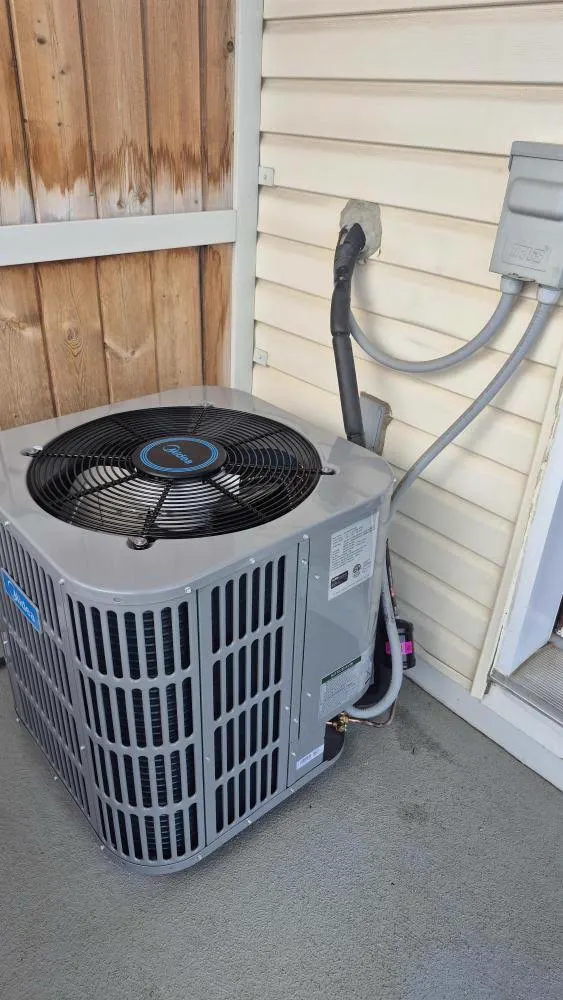
Central air versus ductless
If your home already has a functioning duct system connected to a furnace, a central air conditioner can usually be paired with that system, using the existing ducts and registers to distribute cool air. If your home has no ducts, installing them solely to run central air can mean significant construction. In that case, one or more ductless (wall-mounted) units are typically the more straightforward option. Neither option is inherently better; the right one depends on what your home already has and what you are willing to build.
Proper sizing matters more than horsepower alone
- An air conditioner should be sized to your home's actual cooling load, based on square footage, insulation, window area, orientation, and ceiling height.
- An oversized unit cools quickly but can cycle on and off frequently, which affects humidity control and comfort.
- An undersized unit runs continuously on hot days without ever quite catching up.
- Ask whether your contractor is basing the recommended size on a load calculation for your home, not a general rule of thumb tied only to square footage.
Noise considerations
Outdoor condensing units vary in sound output, and this matters if the unit will sit near a bedroom window, a patio, or a property line close to a neighbour. Ask about the sound rating of the specific model being quoted, not just a general claim that it is quiet. Indoor noise also matters for ductless systems, since the indoor unit operates in the room you are trying to cool.
Outdoor unit placement
- The outdoor unit needs clearance for airflow on all sides and should not be boxed in by fencing, dense shrubs, or siding.
- Placement affects line-set length and therefore installation cost and efficiency.
- Consider prevailing wind, snow accumulation patterns in winter, and roof or eavestrough drainage when choosing a spot.
- A stable, level pad or bracket keeps the unit from settling or vibrating against a wall over time.
Filtration and indoor air quality
Standard filters in a central air handler capture larger particles, and higher-efficiency filters can capture finer particles but may need to be matched to the system's airflow capacity to avoid restricting it. Ductless indoor units have their own washable filters that require regular cleaning. If allergies or air quality are a priority, ask what filtration options are compatible with the specific system being proposed, and whether a whole-home air quality accessory could be added.
Warranties to ask about
- Manufacturer's warranty on parts and, separately, on the compressor, since these terms sometimes differ.
- Whether the warranty requires registration within a certain period after installation.
- The contractor's own labour warranty, separate from the manufacturer's parts warranty.
- Whether regular maintenance is a condition for keeping the warranty valid.
Questions worth asking before you sign
- What load calculation was used to size this unit for my home?
- What is the exact brand and model number being quoted, and what is its sound rating?
- Where exactly will the outdoor unit be placed, and why?
- What does the quote include: electrical work, line set, disposal of old equipment, permits, and commissioning?
- What warranty applies to parts, compressor, and labour, and what maintenance keeps it valid?
Getting more than one quote
Comparing quotes from contractors who each visit your home in person, rather than pricing over the phone, gives you a more realistic picture of what your specific home needs. See our guide on what affects heat pump and air conditioner pricing for the cost factors to compare between quotes.
Official sources
Frequently asked questions
Do I need ductwork to get central air conditioning?
Yes, central air distributes cooled air through ducts and registers. If your home has no ducts, a ductless system is usually the more practical option unless you are prepared for the construction involved in adding ducts.
How do I know what size air conditioner I need?
A proper load calculation, based on your home's square footage, insulation, windows, and layout, determines the right capacity. Ask your contractor whether this calculation was done rather than relying on square footage alone.
Can a ductless system cool my whole house?
A multi-zone ductless system with several indoor units can cool a whole home, but it depends on the number of zones and how the units are placed. A single indoor unit typically cools the room or open area it serves best.
What should I check about the outdoor unit's location before installation?
Confirm it will have clearance for airflow, won't be boxed in, and won't blow noise or condensate toward a neighbour's window or a walkway. Ask your contractor to explain why a specific location was chosen.
Further reading
- Air conditioningAir conditioning installation and replacement.
- Ductless wall-mounted heat pumpsDuctless systems with one or several indoor heads.
- Repair or replace an air conditioner?What matters most when the cooling starts to fade.
- Ductless or central?Comparing the two types of heat pump for your home.
Ready to move forward?
We assess your home before recommending equipment. No obligation.
Call us 24/7 — Our phone line is open at all times. Technician availability is confirmed during the call.