
Ductless (Wall-Mounted) vs Central Heat Pump: Which Fits Your Home?
Updated 2026-09-08
Homeowners in Gatineau and the wider Outaouais region often ask whether a wall-mounted (ductless) heat pump or a central, ducted heat pump makes more sense for their house. Both technologies heat and cool a home, but comfort depends on how well the system matches your home's rooms and layout, not on the technology alone. This guide walks through the practical questions to ask before deciding, since every home is different.
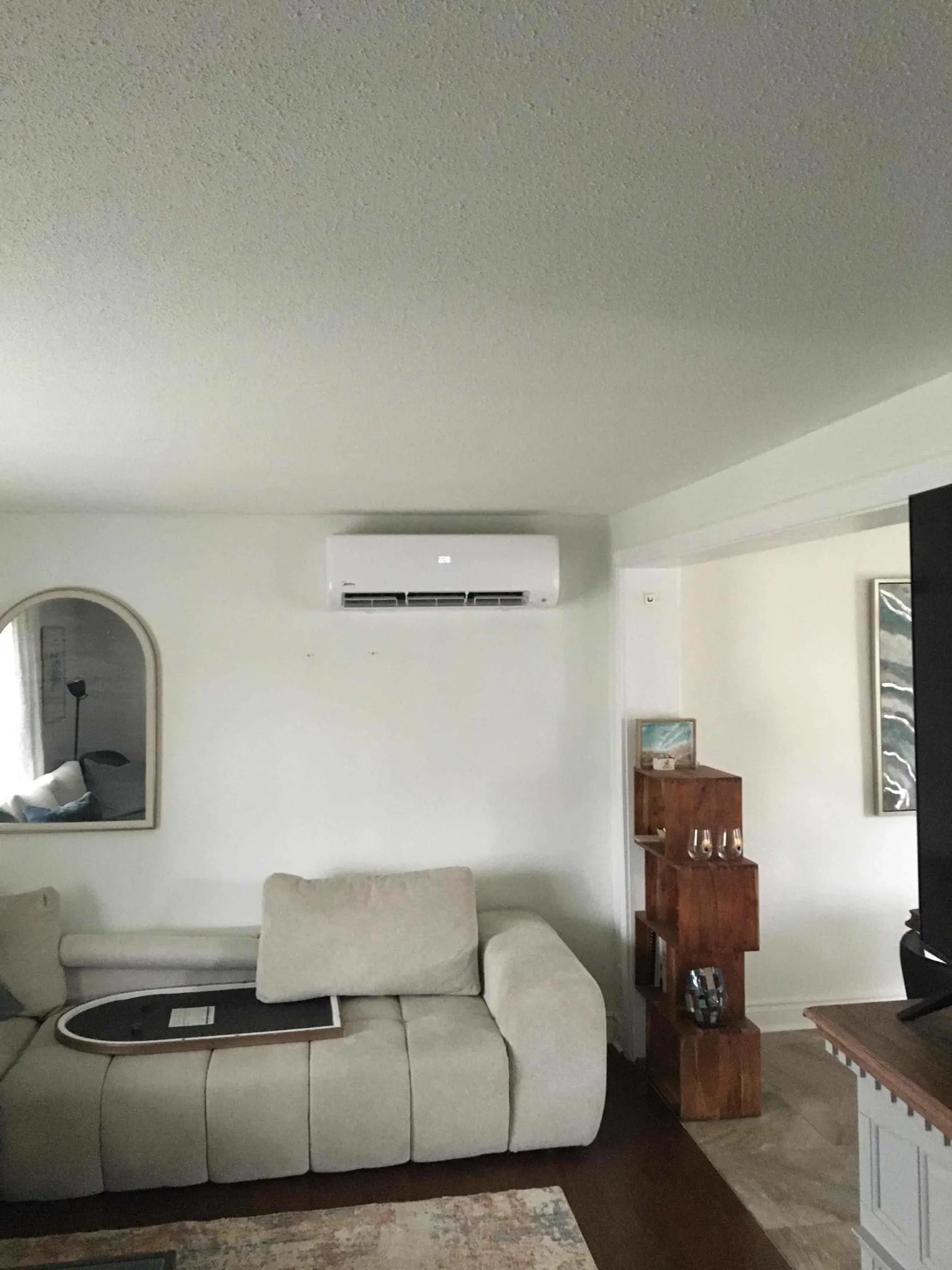
Do you already have ductwork?
This is usually the first fork in the road. If your home already has a functioning duct system connected to a furnace, a central (ducted) heat pump can often be paired with or replace part of that system, distributing conditioned air through existing registers. If your home has no ducts, such as many older Gatineau sectors, bungalows, or additions, installing a full duct system just to run a central heat pump can involve significant construction work. In that case, one or more wall-mounted units are usually simpler to install.
Home layout and room-by-room needs
- A single ductless indoor head performs best when it serves the open area it is placed in; it will not reliably reach rooms behind closed doors down a hallway.
- Closed rooms, such as bedrooms or a finished basement with separate spaces, need a planned distribution strategy: either a dedicated indoor head for each room or ductwork sized to reach them.
- Multi-unit or secondary suites often favour dedicated wall units per zone for independent control.
- The right configuration comes from a room-by-room look at loads and layout, not from a general rule that one system type suits open homes and another suits divided ones.
Aesthetics and interior space
Wall-mounted indoor units are visible on an interior wall, which some homeowners do not want in a living room or bedroom. Central systems hide the distribution in ducts and registers, leaving only a thermostat visible, but they require enough space for ducts, a furnace or air handler, and sometimes soffits to conceal new ductwork.
Noise considerations
Modern ductless indoor units are generally quiet, but they are in the room with you, so some people are more aware of the sound of airflow or the unit cycling. Central systems place the air handler in a mechanical room or basement, which can feel quieter in living spaces, though duct design affects airflow noise at registers. If noise sensitivity matters to you, ask your contractor about sound ratings for the specific equipment being quoted.
Maintenance differences
- Ductless indoor units have filters that should be cleaned regularly and are usually easy to access.
- Ducted systems require attention to duct cleanliness, filter changes at the air handler or furnace, and periodic duct inspection.
- Both types need the outdoor unit kept clear of snow, ice, and debris.
- Multi-zone ductless systems mean more indoor units to maintain, which can add time to a service visit.
What tends to drive the cost
Ductless systems avoid the cost of building new ductwork, which often makes them more accessible when no ducts exist. When existing ductwork is already in sound condition, a ducted central system can be a practical option, since the main cost driver becomes the heat pump and air handler rather than construction. Every home differs, so ask for a written quote that breaks down equipment, electrical, and any construction work separately. See our guide on what affects heat pump pricing for more detail. If you plan to apply for the LogisVert program, keep in mind that support depends on the equipment and eligibility, and in some cases can exclude equipment installed outside the home's thermal envelope, such as in an unconditioned space; check the official program page for the rules that apply to your situation.
A simple way to decide
- No usable ducts and a tight budget for construction: lean ductless.
- Existing ducts in good shape: a central system may integrate smoothly.
- Need for room-by-room control or an addition without ducts: ductless or a hybrid approach.
- Priority on minimal visible equipment: central, if ducts are feasible.
Official sources
Frequently asked questions
Can I mix both systems in the same house?
Yes, some homes use a central system for the main living areas and a ductless unit for an addition or finished basement without ducts. A contractor can assess whether this hybrid approach suits your layout and electrical capacity.
Which option heats better in a Gatineau winter?
Both ducted and ductless heat pumps can be selected in cold-climate models rated for our winters, but performance depends on the specific equipment chosen, not just the distribution type. Ask about the cold-weather rating of any unit you are considering.
Do wall-mounted units work well for cooling?
Yes, ductless units are effective for cooling the room or zone where they are installed, and multi-zone systems can cool several rooms independently, which some homeowners prefer over a single central thermostat.
Will adding ducts increase my home's resale value more than ductless units?
This depends on local buyer expectations and your home's existing systems. It is not something we can generalize with figures; a real estate professional familiar with the Outaouais market can speak to resale factors.
How many wall units does a typical home need?
It depends on square footage, layout, insulation, and how many zones you want to control independently. A contractor typically evaluates each room before recommending a specific number and placement of units.
Further reading
- Ductless wall-mounted heat pumpsDuctless systems with one or several indoor heads.
- Central heat pumpsA heat pump connected to your existing ductwork.
- Heat pumpsChoosing and installing heat pumps suited to our climate.
- Heat pump costWhat makes the bill vary from one project to the next.
- Request a quoteA two-step quote request.
- GatineauThe Gatineau sector and nearby.
Ready to move forward?
We assess your home before recommending equipment. No obligation.
Call us 24/7 — Our phone line is open at all times. Technician availability is confirmed during the call.